Many patients understand that an orthodontic brace can straighten teeth, but they are less certain about what is actually happening beneath the surface. How does a brace work, why do the teeth move gradually, and what prevents them from simply returning to their original positions? The answer involves a carefully planned combination of brackets, orthodontic wires and the natural ability of the tissues surrounding each tooth to adapt to controlled pressure.
A brace does not push every tooth in the same direction or complete the entire correction at once. Instead, the orthodontist plans a sequence of small tooth movements, adjusting the appliance as the bite develops. Each bracket has a specific position and purpose, while the wire helps deliver the forces needed to guide the teeth towards their intended locations. This process continues between appointments, even when the patient cannot see an obvious daily change.
This guide from Aline Specialists in Winchester explains how braces move teeth, what brackets and wires do, why teeth can feel tender or slightly mobile, and how long treatment may take. It also explores appointments, oral hygiene, treatment costs and retention. The article reflects common questions patients search before beginning orthodontic care, including how braces work, what they can correct and why regular monitoring matters.
What Is an Orthodontic Brace and What Is It Designed to Do?
An orthodontic brace is an appliance used to change the position of the teeth and, where appropriate, improve how the upper and lower teeth meet. Treatment can address dental crowding, spaces between teeth and different bite relationships, including deep bites, open bites and crossbites. Braces may also help reposition protruding teeth or prepare the mouth for other forms of dental care when coordination between treatments is required.
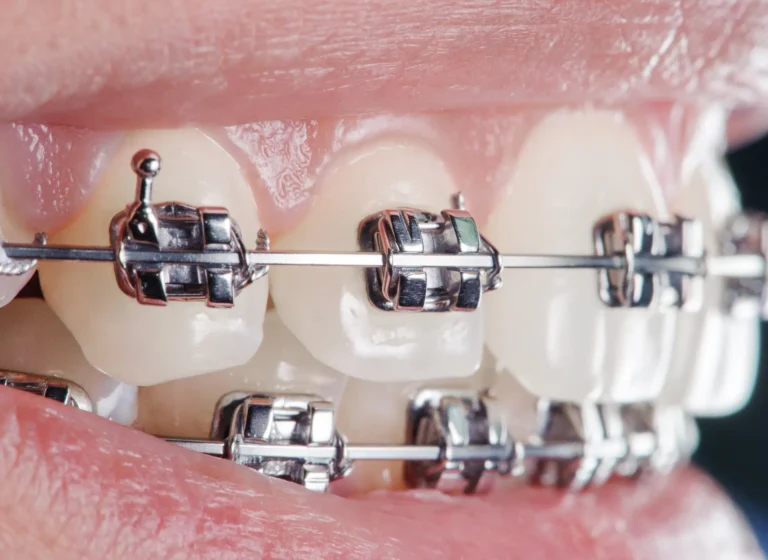
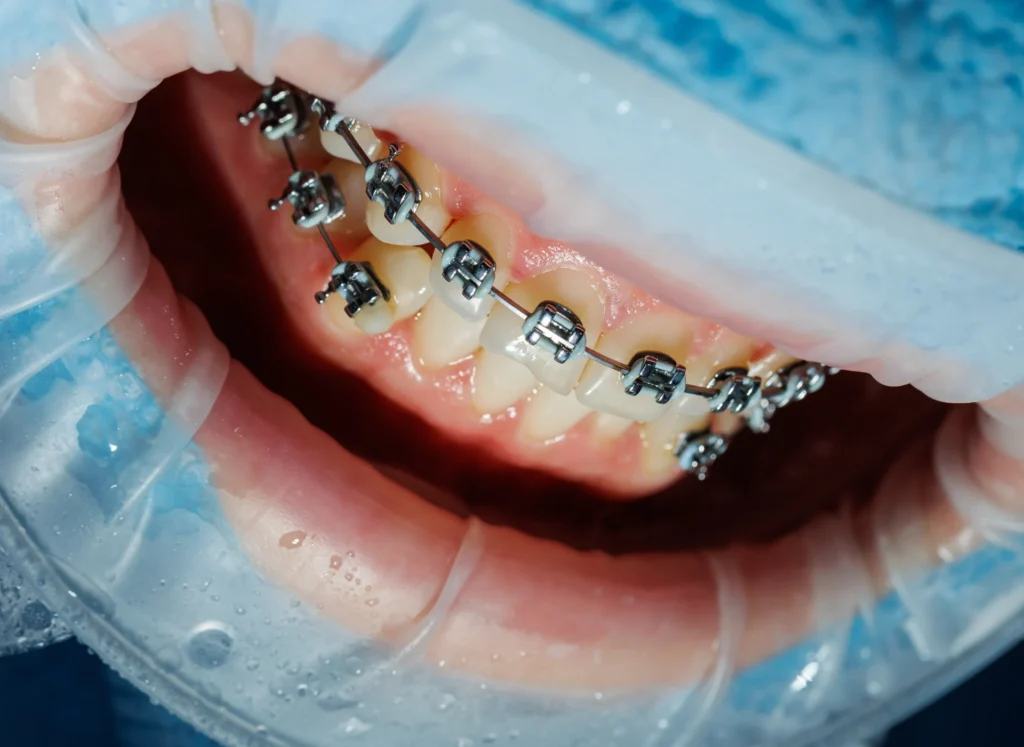
A fixed brace commonly consists of small brackets bonded to the enamel, an archwire running through those brackets and small components that keep the wire in place. The brackets act like individual handles attached to the teeth, while the wire connects them and helps guide movement. The appliance remains in position throughout active treatment and can only be adjusted or removed by the orthodontic team.
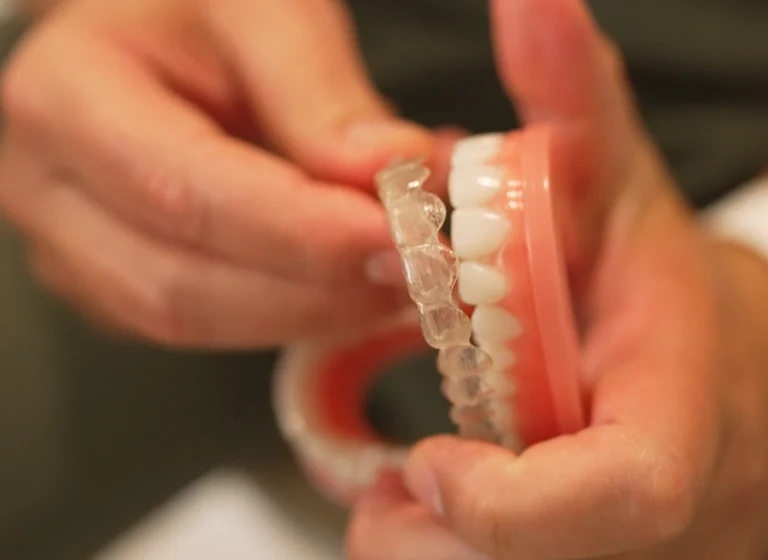
Different types of fixed appliances can use metal or ceramic brackets, and some systems hold the wire with elastic modules while others use a built-in mechanism. Although the appearance and design may vary, their essential function is similar: they allow the orthodontist to apply controlled pressure, manage precise tooth movement and progressively improve alignment. No appliance is automatically appropriate for every patient, so the recommendation depends on the diagnosis, bite and movements required.
Braces do not simply make the front teeth look straighter. A complete treatment plan considers bite function, facial balance and long-term stability. Moving one tooth can affect the available space and the relationship between several neighbouring teeth, which is why treatment must be planned as a coordinated process rather than a series of isolated cosmetic adjustments.
How Does a Brace Work to Move Teeth Through the Jawbone?
A tooth is not fused directly and permanently to the jawbone. Its root is surrounded by a thin supporting structure called the periodontal ligament, which connects the tooth to the surrounding bone. When an orthodontic appliance applies gentle and controlled pressure, the ligament and nearby bone respond biologically. This response allows the tooth to move gradually rather than being forced suddenly into a new position.
On the side towards which a tooth is moving, pressure encourages the surrounding bone to be remodelled. On the opposite side, new bone formation helps support the space created by the movement. This coordinated process of bone resorption, bone formation and periodontal adaptation takes time. It is one reason orthodontic movement must remain gradual and carefully monitored rather than being accelerated through excessive force.
Patients sometimes imagine that the brace moves teeth only when the wire is adjusted. In reality, the appointment activates or modifies the system, but much of the movement occurs slowly in the following weeks. Teeth may move at an approximate rate of around one millimetre per month, although the actual response differs according to the tooth, movement, age, biology and treatment plan.
Using heavier pressure does not necessarily make treatment safer or more effective. Excessive force can increase discomfort and may place unnecessary stress on the roots and supporting tissues. Orthodontists therefore use light biological forces, planned treatment stages and regular clinical reviews. Teeth are living structures, and their movement depends on the body having sufficient time to adapt.
This also explains why patients should never attempt to move teeth using elastic bands, improvised appliances or products bought without professional assessment. Uncontrolled forces cannot account for root position, bone support or the way the bite fits together. DIY tooth movement may damage the gums, roots or supporting tissues and can make later treatment more complicated.
How Do Brackets, Wires and Elastics Control Tooth Movement?
Every component of a fixed brace has a purpose. The brackets are carefully positioned on the teeth according to the treatment plan. Each bracket provides a point through which force can be transferred from the wire to the tooth. Small differences in bracket position can influence whether a tooth needs to rotate, tip, move vertically or have its root guided into a different position.
The archwire passes through the brackets and attempts to return towards its intended shape. When the wire is placed into brackets attached to crowded or uneven teeth, it becomes distorted. As it gradually returns towards its original form, it applies gentle pressure to the brackets and therefore to the teeth. Early wires are often light and flexible, while later stages may use different wire dimensions or properties to provide greater control.
Small elastic rings or metal ties may hold the wire within each bracket. Additional elastics can sometimes be worn between the upper and lower braces to help improve the way the jaws and teeth meet. These elastics only work when they are worn exactly as instructed. Wearing additional elastics or changing their position without advice does not safely accelerate treatment and may create unwanted tooth movement, bite imbalance or unnecessary discomfort.
Orthodontic movement is not limited to pushing a tooth sideways. A planned appliance may:
- Rotate a twisted tooth
- Close or create space
- Move a tooth forwards or backwards
- Guide an unerupted tooth
- Correct vertical tooth position
- Coordinate the dental arches
- Improve upper and lower bite relationships
These movements often happen in a deliberate sequence. The orthodontist may first create space, then align individual teeth and finally refine the bite. Attempting every correction simultaneously could make the forces difficult to control. The staged approach allows the clinical team to monitor tooth response, root positioning and the relationship between the upper and lower arches.
How Is a Brace Planned, Fitted and Adjusted?
Before a brace is fitted, the orthodontist needs to understand the full clinical situation. The assessment normally includes the patient’s medical and dental history, an examination of the teeth and gums, and an evaluation of the bite, jaws and facial proportions. Digital scans, photographs and radiographic images may also be required to examine tooth positions, roots and developing teeth that cannot be fully assessed by looking inside the mouth alone.
These records are used to produce an individual treatment plan. The orthodontist considers which teeth need to move, the sequence of movement, whether sufficient space is available and which appliance can provide the required control. Some patients may require the removal of teeth, expansion, additional attachments or coordination with another dental professional, while others can be treated without these steps. The decision must be based on individual anatomy, clinical objectives and long-term stability.
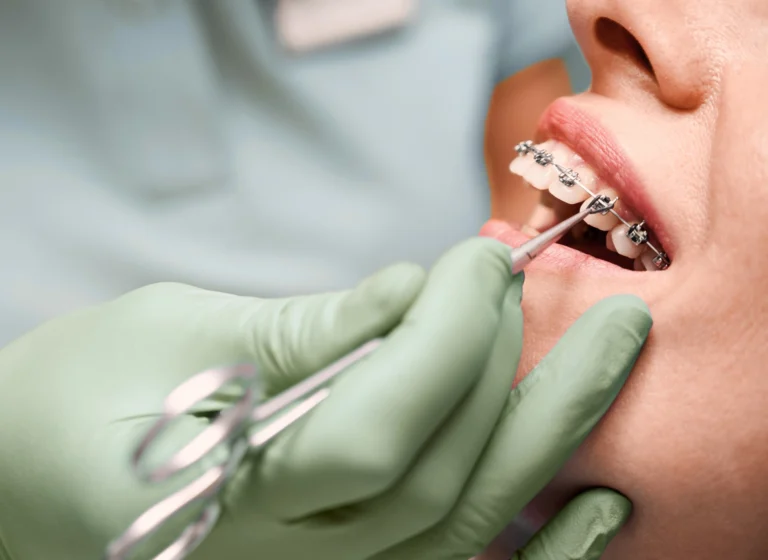
When a fixed brace is fitted, the teeth are cleaned and prepared before each bracket is bonded using a dental adhesive. The orthodontic wire is then placed through the brackets and secured. Fitting the brace should not involve drilling into the teeth, although keeping the mouth open can feel tiring. The appliance may initially feel unfamiliar against the lips and cheeks.
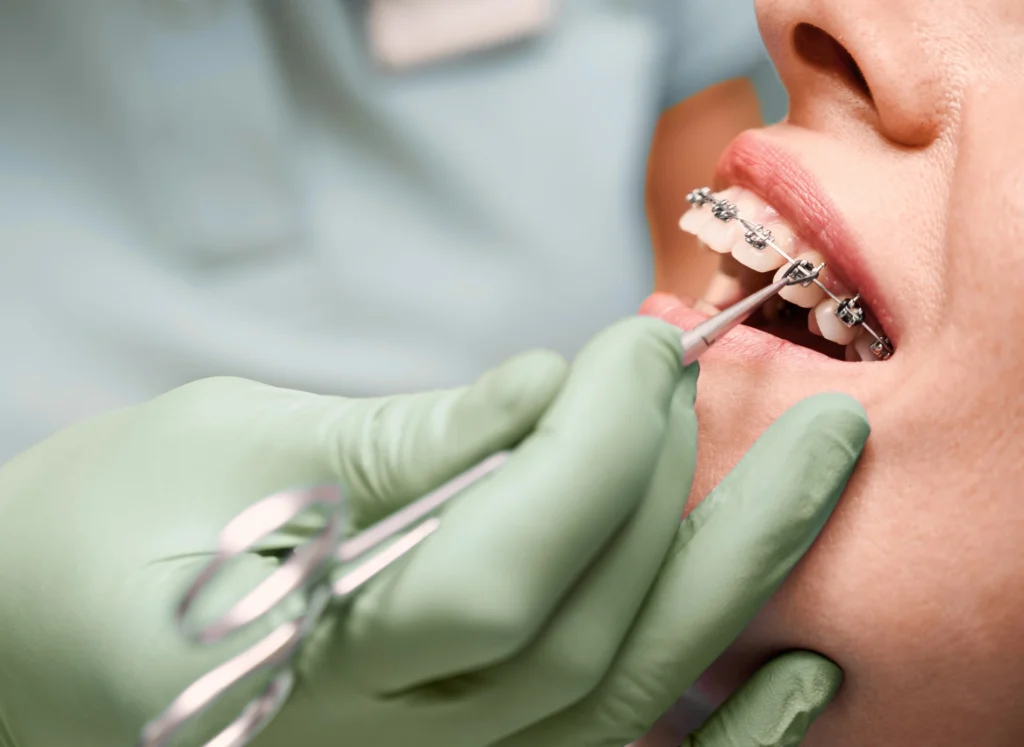
During subsequent appointments, the orthodontist assesses progress, checks for broken components and makes any necessary changes. This may involve replacing the wire, adjusting its shape, changing elastic ties or providing new instructions for interarch elastics. Patients often call this process “tightening”, but the appointment is more accurately a controlled modification of the forces being applied.
The team also checks oral hygiene, gum condition and whether the planned movements are occurring appropriately. At Aline Specialists, digital treatment planning and clinical monitoring are combined with the judgement of Specialist Orthodontists who manage both straightforward and complex cases. The practice’s approach considers alignment alongside bite function, facial harmony and periodontal health.
What Can a Brace Correct and Can Every Tooth Be Moved?
Braces can treat many orthodontic concerns, but the possibilities depend on the condition of the teeth, gums, bone and jaws. Fixed appliances are commonly used to correct crowded teeth, close unwanted spaces and improve teeth that are rotated, protruding or positioned too far inside the dental arch. They can also help manage bite problems where the upper and lower teeth do not meet evenly.
A brace may be used to move a high canine into the arch, close selected gaps or create space for a replacement tooth. In more complex cases, orthodontics may be coordinated with restorative dentistry or jaw surgery. Missing teeth, impacted teeth and significant differences in jaw position require particularly careful planning because tooth alignment alone may not resolve the complete problem.
Not every movement is equally simple. Teeth have different root shapes, positions and amounts of surrounding bone. A front tooth with one relatively straight root responds differently from a molar with several roots. Teeth affected by previous trauma, root abnormalities, gum disease or reduced bone support may require a modified approach. Active periodontal disease should be treated and stabilised before orthodontic movement begins.
Braces also have limitations. They can move teeth within the supporting tissues, but they cannot safely create unlimited changes to the size or shape of the jaws in a fully grown adult. When a skeletal discrepancy is significant, the orthodontist may discuss other treatment pathways. Similarly, braces cannot make a naturally small tooth physically larger or repair damaged enamel; those concerns may require separate dental treatment.
This is why photographs, online simulations and DIY assessment tools cannot determine exactly what a brace can achieve for an individual patient. A safe recommendation must consider root health, jaw relationships and the complete bite. The objective is not simply to make each tooth appear straight from the front, but to create a result that is functional, maintainable and appropriate for the patient’s anatomy.
Why Do Teeth Feel Sore or Slightly Loose During Brace Treatment?
After a brace is fitted or adjusted, it is common for the teeth to feel tender, sensitive to pressure or mildly uncomfortable for several days. This occurs because the periodontal ligament and surrounding tissues are responding to the newly applied force. Patients may notice discomfort when biting into firm foods, even though the brace fitting itself does not usually require an injection or cause pain in the way a surgical procedure might.
The cheeks, lips or tongue may also need time to adapt to the appliance. Brackets and wires can initially rub against the soft tissues, particularly while eating or speaking. Orthodontic wax can provide temporary protection over an irritating area, and softer foods may be easier during the first few days. Any pain-relief medicine should be used according to professional advice and the manufacturer’s instructions.
Some patients feel that their teeth are slightly mobile during treatment. A small degree of mobility can occur because the supporting tissues are actively remodelling as the teeth move. This does not normally mean that braces are causing the teeth to fall out. However, significant mobility, persistent pain or swelling should be reported so that the clinical team can assess the cause.
Orthodontic treatment carries recognised risks, including gum inflammation, enamel demineralisation and changes to the roots. Small amounts of root shortening can occur during orthodontic movement and are usually not significant, while extensive root resorption is uncommon. Careful diagnosis, appropriate forces and monitoring help manage these risks.
Patients should contact the orthodontic practice if pain remains strong beyond the expected adjustment period, the gums become very red or swollen, or the appliance breaks. A loose bracket or distorted wire may stop working correctly and can irritate the mouth. It should not be repaired using household glue, improvised tools or self-directed wire cutting.
How Long Does a Brace Take to Work?
There is no universal treatment time because every patient begins with a different tooth position, bite and biological response. Fixed-brace treatment often lasts around 18 to 24 months, although some cases are completed sooner and complex cases may require longer. Broader patient guidance indicates that orthodontic treatment can range from several months to more than two years, depending on the problem being treated.
The first visible changes may appear relatively early, particularly when front teeth begin aligning. This does not mean that treatment is nearly complete. Correcting the root positions, back-tooth relationships and final bite can require considerably more time than improving the appearance of the front teeth. Removing the brace too soon could leave an unstable or incomplete result.
Treatment length can be affected by:
- Complexity of the original bite
- Amount and type of movement required
- Jaw growth and biological response
- Broken brackets or damaged wires
- Missed adjustment appointments
- Elastic wear and patient cooperation
- Oral hygiene and gum health
- Need for multidisciplinary care
Regular appointments are commonly scheduled every six to eight weeks, although the interval varies according to the appliance and treatment phase. The brace continues to work between appointments, and the orthodontist reviews whether the forces remain appropriate.
Repeated breakages can delay treatment because the appliance may no longer apply the intended force. Patients should therefore follow dietary guidance, avoid hard or sticky foods that may damage brackets and contact the practice when a component breaks. Treatment should not be rushed through heavier wires, extra elastics or unauthorised adjustments. Biological tooth movement, bone remodelling and tissue adaptation require time.
How Much Does Treatment with a Brace Cost?
The cost of orthodontic treatment varies because braces are not a standard product applied in exactly the same way to every patient. Fees can depend on the complexity of the bite, the appliance selected, the expected treatment duration and the number or type of appointments required. A straightforward alignment concern and a complex multidisciplinary case do not involve the same planning, materials or clinical monitoring.
Metal fixed braces, ceramic appliances and other orthodontic systems can involve different laboratory and clinical processes. The total plan may also include diagnostic records, regular reviews, emergency care arrangements and retainers. Patients should therefore consider what is included in a proposed treatment pathway rather than comparing a single headline figure without understanding the clinical details.
A personalised estimate can only be prepared after an orthodontic assessment. The clinician must first determine:
- What needs to be corrected
- Which appliance is suitable
- How complex the movements are
- Whether additional procedures are required
- How long monitoring may continue
- What retention will be needed
At Aline Specialists, patients receive an individual plan based on their anatomy, bite, facial balance, periodontal condition and lifestyle. The practice offers zero per cent financing, subject to eligibility and agreed terms, to help suitable patients manage treatment payments.
Patients should avoid choosing orthodontic treatment solely because an online provider appears cheaper or promises a rapid result. A meaningful comparison requires consideration of the clinical assessment, professional supervision and support available if the teeth do not respond as anticipated. Orthodontic care involves an active biological process, so diagnosis and ongoing monitoring remain essential parts of treatment.
Why Are Oral Hygiene and Regular Appointments Essential with Braces?
A brace can only work safely when the teeth and gums remain healthy enough to support movement. Brackets and wires create additional areas where plaque, food debris and bacteria can accumulate. If these areas are not cleaned carefully, patients may develop swollen gums, decay or permanent white marks around the brackets. These problems are not an unavoidable result of braces; they are strongly influenced by plaque control, diet and attendance for dental care.
Patients should brush thoroughly with fluoride toothpaste, clean above and below the brackets and use interdental brushes beneath the wire. Regular dental examinations remain necessary because the orthodontist monitors the brace and tooth movement, while the general dentist assesses the wider health of the teeth and gums. Professional hygiene support may be recommended when plaque is difficult to control.
Diet also matters. Hard, crunchy or sticky foods can break brackets or bend wires, while frequent sugary foods and drinks increase the risk of decay. Cutting firm foods into smaller pieces and limiting repeated sugar exposure can help protect the appliance and enamel. A broken brace may no longer produce the planned movement and can extend treatment time.
Patients should never skip appointments because the teeth appear straighter. Reviews allow the orthodontist to assess treatment progress, appliance integrity and any signs that the plan needs to be modified. Unsupervised tooth movement can create problems that are not visible when looking only at the front of the smile.
The integrated hygiene philosophy at Aline Specialists recognises that healthy gums are fundamental to orthodontic outcomes. The team considers periodontal health before treatment, supports hygiene during active movement and plans long-term maintenance during retention.
Why Do You Need Retainers After a Brace Has Finished Working?
When the teeth reach their planned positions, the active brace can be removed, but the orthodontic journey is not complete. The bone and gums surrounding the teeth need time to adapt, and teeth retain a natural tendency to move. A retainer holds the result while the supporting tissues settle and helps limit relapse over the longer term.
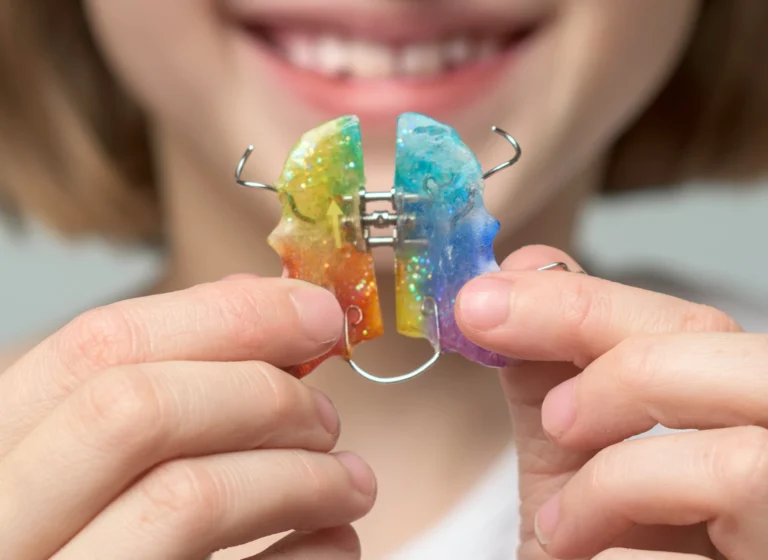
Retainers may be removable or fixed behind the teeth. The appropriate type depends on the original problem, final tooth position and individual clinical needs. Some patients receive more than one form of retention. Instructions can vary, but long-term wear is often advised because changes in tooth position can continue throughout life.
Wearing a retainer does not mean the brace failed. During active treatment, the brace moves the teeth; during the retention phase, the retainer protects the new arrangement. Forgetting to wear a removable retainer can allow teeth to shift, and the appliance may eventually feel tight or stop fitting. A broken bonded retainer can also permit unwanted movement if it is not recognised.
Retention requires:
- Consistent wear as instructed
- Appropriate retainer cleaning
- Safe storage when removed
- Regular checks for damage
- Prompt advice if it stops fitting
- Continued dental and hygiene care
Patients should never force a retainer that no longer fits or try to adjust it using hot water, pliers or other DIY methods. The orthodontic team should assess whether the retainer can be replaced or whether tooth movement has occurred. Long-term stability depends on patient cooperation, retainer maintenance and continued professional monitoring.
Conclusion: How Does a Brace Work to Create a Stable Result?
So, how does a brace work? A fixed brace uses brackets, wires and other carefully selected components to apply gentle forces to the teeth. Those forces stimulate periodontal adaptation, bone remodelling and gradual changes in tooth position. The process is biological, which is why meaningful movement occurs over weeks and months rather than instantly.
The orthodontist controls the direction, sequence and amount of movement through detailed diagnosis and regular adjustments. Early stages may focus on alignment, while later stages refine root position, arch coordination and the way the upper and lower teeth meet. A brace can manage crowding, spacing and many bite concerns, but the plan must remain appropriate for the patient’s anatomy and oral health.
Good results also depend on the patient. Keeping the brace clean, protecting it from breakages, attending appointments and following instructions for elastics all contribute to progress. After active treatment, retainers are required to support long-term stability, healthy function and maintenance of the new tooth positions.
No patient should attempt to move teeth using home-made appliances, unauthorised elastic bands or unsupervised online systems. Orthodontic force must be planned around the teeth, roots, gums and jawbone. Professional assessment remains the safest way to determine whether a brace is appropriate and what type of treatment may be required.
To understand how does a brace work in relation to your own teeth and bite, contact Aline Specialists to arrange an orthodontic appointment in Winchester. The team can assess your needs, explain the available options and prepare a personalised treatment plan.