A palatal expander for children is an orthodontic appliance used to widen an upper jaw that has developed too narrowly. It may be recommended when a child has a crossbite, insufficient room for developing teeth or a mismatch between the widths of the upper and lower dental arches. Treatment is usually considered while the child is still growing, when the structures of the upper jaw can respond more readily to controlled expansion.
For parents, the suggestion of an expander can naturally raise questions. How does the appliance widen the palate? Will it hurt? Can the child eat and speak normally? Does expansion avoid braces later? The answers depend on the child’s jaw development, tooth eruption and complete bite, which is why an orthodontic assessment is needed before any appliance is recommended.
A palatal expander is not used simply because the upper teeth appear crowded. The orthodontist must determine whether the problem comes from a genuinely narrow upper jaw, the position of individual teeth or a more complex skeletal relationship. At Aline Specialists in Winchester, assessment may include a clinical examination, digital scanning, photographs and radiographic records where appropriate, allowing treatment to be planned around growth, facial balance and long-term stability.
This guide explains what palatal expansion is, how the appliance works and what children and parents can expect during treatment. It also discusses activation, oral hygiene, possible discomfort, treatment duration and the likelihood of needing braces afterwards.
What Is a Palatal Expander for Children?
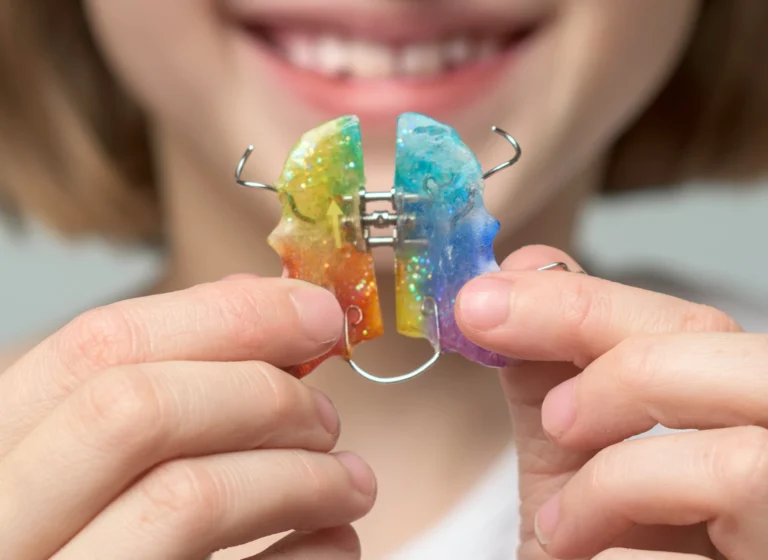
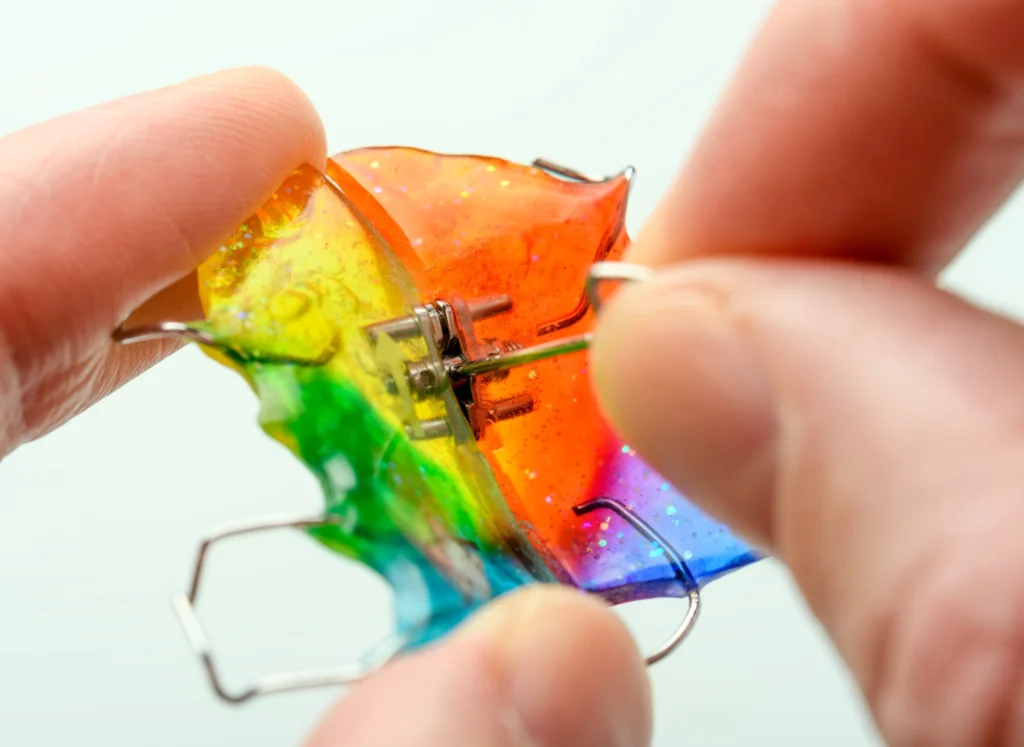
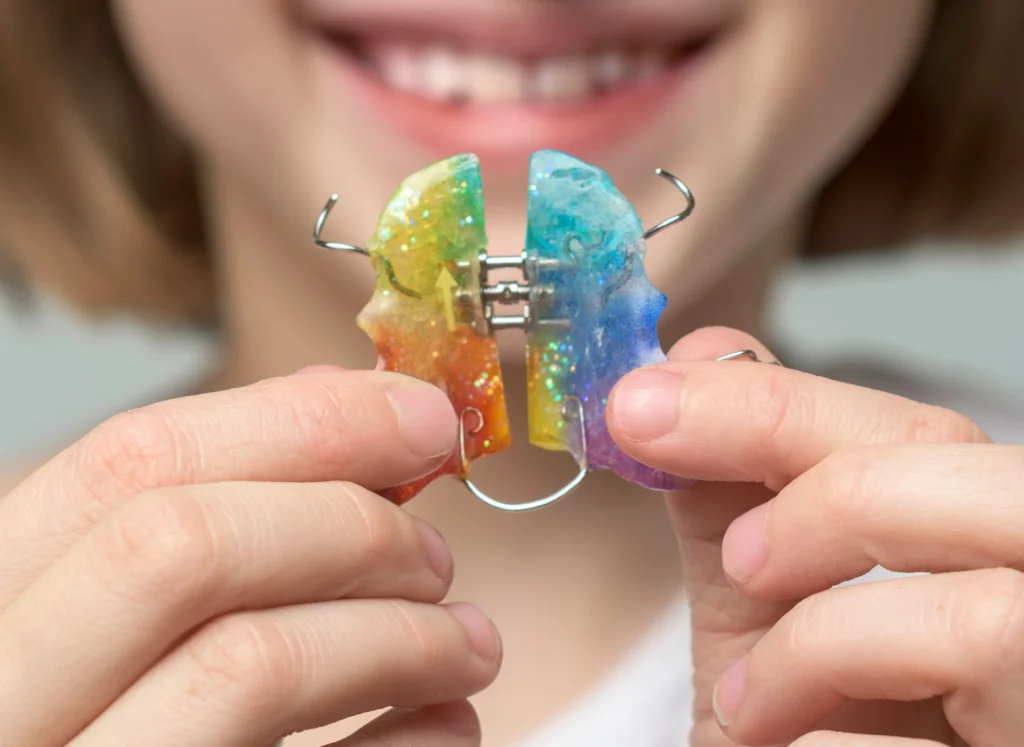
A palatal expander is an appliance designed to increase the width of the upper jaw, also known as the maxilla. A commonly used fixed design is attached to the upper back teeth and contains a central expansion screw, a supporting metal framework and bands or a bonded plastic section that holds the appliance securely. Because it is fixed in position, the child cannot remove it during meals or overnight.
The term “palate” refers to the roof of the mouth, but the treatment is intended to influence the width of the upper jaw rather than merely pushing the visible teeth outwards. During growth, the upper jaw develops as two sections joined at the centre. An appropriately selected appliance applies controlled outward pressure, gradually separates these sections and holds the new position while bone forms within the expanded area.
Palatal expanders can have different designs. Some are activated using a small key, while others create expansion through springs or other mechanisms. The orthodontist selects the appliance according to the child’s age, dental development and required amount of correction. Parents should not assume that an appliance used by another child will be suitable for their own child.
Expansion is one part of interceptive orthodontics: treatment provided during growth to address a developing problem at an appropriate time. It does not mean that every irregular tooth should be treated early. In many children, the safest recommendation is simply growth monitoring, eruption review and reassessment at a later stage.
Why Might a Child Need a Palatal Expander?
A palatal expander is most commonly considered when the upper jaw is too narrow in relation to the lower jaw. One visible sign can be a posterior crossbite, where some of the upper back teeth bite inside the lower teeth instead of outside them. A narrow upper arch may also contribute to dental crowding, reduced space for permanent teeth or an uneven relationship between the two sides of the bite.
Parents may notice that a child moves the lower jaw sideways when closing the mouth, that the dental arches appear different in width or that adult teeth are emerging in crowded positions. However, these observations cannot confirm the diagnosis by themselves. Similar-looking concerns can arise from the position of individual teeth, a functional jaw shift or broader growth differences, each of which may require a different approach.
Expansion may create additional room within an abnormally narrow upper arch and improve the relationship between the upper and lower teeth. It may also help provide a more favourable path for certain permanent teeth to erupt. However, the treatment cannot create unlimited space, correct every form of crowding or guarantee that extractions and braces will never be needed later.
An expander should therefore be recommended because there is a clear transverse jaw problem, an appropriate stage of growth and a realistic clinical objective. It should not be used solely because a parent wants to avoid fixed braces or because an online image appears similar to the child’s bite. Safe planning requires assessment of the teeth, jaws and supporting tissues.
How Does a Palatal Expander Work?
The upper jaw develops in two main halves connected along the centre of the palate. In a growing child, a rapid maxillary expander can apply gentle pressure across this central area. When the screw is activated according to the orthodontist’s instructions, the appliance gradually widens the upper jaw, increases the arch width and creates space between the two halves where new bone can develop.
The process has an active phase and a stabilisation phase. During active expansion, the screw may be turned on a prescribed schedule for a limited number of days or weeks. Once the required width has been reached, activation stops, but the appliance generally remains in place. This holding period allows new bone formation and helps stabilise the correction before the expander is removed or the next orthodontic stage begins.
A temporary space often develops between the two upper front teeth during rapid expansion. Although this can surprise families, it can be an expected sign that the upper jaw is widening. The front teeth may later move closer together naturally, and their final alignment can be managed during subsequent orthodontic treatment.
The child should never receive additional turns because progress appears slow. Each activation changes the appliance pressure, affects the developing jaw and must remain within the prescribed plan. Turning the screw too frequently, continuing beyond the instructed number or trying to reverse it without advice can produce unwanted effects. Parents should record activations carefully and contact the practice whenever they are uncertain.
At What Age Is a Palatal Expander Most Effective?
Palatal expansion is generally most effective while a child is still growing and before the central connection within the upper jaw becomes more mature. There is no single age that is correct for every patient because skeletal development, tooth eruption and the type of bite problem vary considerably between children. A clinical assessment is more reliable than choosing treatment based only on chronological age.
Some children may be assessed around the early mixed-dentition stage, when both baby teeth and permanent teeth are present. This allows the orthodontist to observe how the upper jaw, lower jaw and permanent teeth are developing. An examination at this stage does not automatically lead to treatment. Many children are placed under review until the timing becomes more favourable.
When a significant crossbite or narrow upper jaw is present, intervention during growth may allow the orthodontist to use the child’s natural development. Waiting until the upper jaw has fully matured can make expansion less straightforward, and adults with marked skeletal narrowing may require a different approach, sometimes involving surgery.
Beginning too early can also be unhelpful. The correction may not be stable, the child may struggle with the appliance or a later orthodontic phase may still be required after more permanent teeth erupt. The objective is therefore the right treatment, at the right developmental stage, for a clearly diagnosed problem.
At Aline Specialists, children’s treatment is planned around growth rather than a standard timetable. The team evaluates jaw relationships, facial development and eruption patterns before recommending either active intervention, continued monitoring or later comprehensive treatment.
What Happens When a Palatal Expander Is Fitted and Activated?
Before the appliance is made, the orthodontist records the child’s teeth and bite using a digital scan or another suitable method. The expander is then produced to fit the child’s upper arch, back teeth and individual anatomy. At the fitting appointment, it is secured to the teeth, checked for stability and adjusted so that it does not place unintended pressure on the gums or soft tissues.
If the appliance uses an expansion screw, the parent or caregiver is shown how to insert and rotate the key safely. The number and frequency of turns must follow the exact prescription. The British Orthodontic Society notes that rapid expanders may be activated twice daily, but the correct schedule is always the one provided by the child’s own orthodontist.
It is helpful for families to complete the activation at the same times, use good lighting and keep a written record. The child should sit or lie in a stable position with the head supported. The key must be inserted fully and moved in the instructed direction until the next hole becomes visible. It should never be pulled backwards in a way that reverses the completed turn.
Regular reviews are particularly important during the active phase. The orthodontist checks the amount of expansion, appliance stability, oral hygiene and the way the bite is changing. The BOS patient leaflet explains that appointments may initially be weekly and become less frequent after active expansion is complete.
Parents should stop activating the appliance and contact the practice if the key cannot be inserted, the expander becomes loose or the child develops unexpected pain. Guessing, forcing the mechanism or continuing despite a problem can damage the appliance, teeth or treatment result.
Does a Palatal Expander Hurt Children?
Fitting an expander does not usually involve drilling into the teeth or surgery. However, the child may feel pressure, tightness or tenderness during the first few days as the mouth adapts. The teeth may be sore when chewing, and the child may describe pressure around the upper teeth, palate, cheeks or nose. BOS guidance notes that soreness can occur for approximately three to five days after fitting.
The appliance also occupies space in the roof of the mouth, so speech and swallowing may initially feel different. Certain sounds can be less clear while the tongue learns to move around the framework. Increased saliva is also possible during the adjustment period. Regular speaking, slow eating and time usually help the child adapt.
Softer foods can be useful during the first few days, including pasta, rice, yoghurt, eggs and food cut into small pieces. The child should chew carefully and avoid sticky or hard items that could pull on the bands or distort the appliance. Orthodontic wax may be advised if part of the framework rubs against the cheek or tongue.
Pain relief should only be used according to professional advice, the child’s medical history and the instructions supplied with the medicine. Parents should not place gels, household substances or improvised materials around the appliance without guidance.
Discomfort should gradually improve. Severe pain, persistent swelling, bleeding or an appliance that suddenly feels different should be assessed. Expansion is intended to create controlled pressure, not ongoing significant pain. A child should never be told simply to tolerate symptoms that are worsening or interfering with eating and sleeping.
Can Children Eat Normally with a Palatal Expander?
Most children can continue eating a varied diet, but they need to modify how they manage certain foods. Sticky sweets, chewing gum and very chewy foods can attach to the central screw, supporting bands or framework. Hard foods can loosen the appliance, while frequent sugary drinks and snacks increase the risk of plaque accumulation and enamel damage around the supporting teeth.
Firm foods such as apples, carrots and crusty bread can often be eaten when cut into small pieces rather than bitten into directly. During the first few days, softer meals may be more comfortable while the teeth adapt to pressure. Children should take smaller mouthfuls, chew slowly and drink water during meals to help clear food from around the appliance.
A practical diet should include:
- Soft fruit, vegetables and balanced meals
- Water between meals instead of sugary or fizzy drinks
- Small pieces of firmer foods rather than biting directly
- Avoidance of sticky sweets, hard confectionery and chewing gum
- Care with nuts, popcorn and foods that may become trapped
Parents should check the appliance after meals, especially during the first weeks. Food can collect between the expander and the palate even when the child feels that the mouth is clear. Rinsing with water is useful, but it does not replace toothbrushing, interdental cleaning or professional hygiene guidance.
If the appliance becomes loose after eating, activation should stop and the practice should be contacted. Children and parents should not push the expander back into place, tighten bands or use household glue. A loose appliance may apply uneven force, irritate the tissues or interfere with planned expansion.
How Should a Palatal Expander Be Cleaned?
A palatal expander creates areas where plaque and food can collect, particularly around the supporting back teeth, underneath the framework and beside the central screw. Effective cleaning is essential for protecting the tooth enamel, gum health and appliance during treatment. The child should brush every tooth carefully with fluoride toothpaste, paying close attention to the gumline and the surfaces around the bands.
A small-headed toothbrush, single-tufted brush or suitable interdental brush can help reach narrow areas. The precise tools depend on the design of the expander, so families should ask the orthodontic team for a demonstration. A water flosser may help remove loose debris in some cases, but it should not automatically replace mechanical brushing, fluoride toothpaste and cleaning around every supporting tooth.
The child should ideally clean after meals when possible, particularly when food becomes trapped underneath the appliance. At a minimum, the morning and bedtime routines must be thorough. The BOS recommends brushing for two minutes twice daily with fluoride toothpaste and carrying a toothbrush for use after lunch or snacks where possible.
Persistent bad breath, swollen gums or visible deposits suggest that plaque is not being removed effectively. Families should seek guidance rather than brushing aggressively or using sharp objects to dislodge food. Pins, metal tools and hard toothpicks can injure the palate, gums or appliance.
Regular dental check-ups remain necessary during expansion. The orthodontist monitors jaw development and the appliance, while the general dentist continues assessing decay and overall oral health.
How Long Does a Child Wear a Palatal Expander?
Treatment duration includes both the active widening stage and the period in which the appliance holds the new width. According to the BOS patient leaflet, rapid maxillary expansion may involve approximately two to three weeks of activation, followed by several months of stabilisation, with the appliance remaining in place for around three to nine months overall. Individual plans can differ, so these figures should not replace the orthodontist’s instructions.
The holding phase is essential because the expansion should not be considered stable as soon as the screw stops turning. The tissues and bone need time to adapt to the new jaw width. Removing the appliance prematurely may increase the risk of losing part of the correction. During this stage, families must continue maintaining good oral hygiene, attending reviews and protecting the appliance from damage.
The orthodontist decides when sufficient expansion has been achieved and when the child can move to the next stage. In some cases, another appliance or fixed braces may be fitted while the expanded width is maintained. In others, the child may return to a period of observation while additional permanent teeth erupt.
A temporary gap between the upper front teeth may become visible during active expansion. The BOS explains that this space often reduces spontaneously, although the final tooth positions may still require orthodontic alignment.
Parents should not judge progress solely by the appearance of the gap or stop activation because the upper arch looks wider. The end point is determined through clinical measurements, bite assessment and the planned relationship between the upper and lower jaws.
Will a Child Still Need Braces After Palatal Expansion?
Palatal expansion and braces perform different tasks. The expander primarily addresses the width of the upper jaw, while braces or aligners guide individual teeth into more appropriate positions and refine the bite. For this reason, many children still require another phase of orthodontic treatment after expansion. BOS guidance states that further fixed-brace treatment is very likely following rapid maxillary expansion.
Expansion may create room for permanent teeth, correct a crossbite or make later alignment more manageable. However, it cannot automatically rotate every tooth, close all spaces or coordinate the complete bite. Claims that an expander will always prevent future braces, extractions or complex care should therefore be treated cautiously.
Some children begin fixed braces soon after the active expansion phase, while others are monitored until more permanent teeth have erupted. The sequence depends on the child’s dental age, remaining facial growth and the objectives of treatment. A second phase does not mean that the early appliance was unsuccessful; it may have completed a specific correction that could not be achieved as effectively later.
The orthodontist should explain the likely pathway before treatment starts, including what the expander is intended to accomplish and which concerns may remain. Parents should understand the difference between jaw expansion, tooth alignment and final retention.
At Aline Specialists, interceptive treatment is designed around growth rather than simply providing an appliance as early as possible. The team assesses whether expansion can offer a meaningful benefit and how it may connect with later treatment for healthy function, facial harmony and long-term stability.
What Are the Risks and When Should Parents Contact the Orthodontist?
Palatal expanders are established orthodontic appliances, but they still require careful supervision. Possible concerns include temporary soreness, irritation of the tongue or cheeks, food trapping and difficulty maintaining hygiene. A temporary front-tooth gap can also occur during expansion. These changes are generally manageable when the appliance is functioning correctly and the child attends regular reviews.
More significant problems can arise if a band becomes loose, the screw stops turning or the appliance applies uneven pressure. Parents should stop activation and contact the orthodontic team rather than waiting for the next scheduled visit. BOS guidance advises seeking an appointment promptly because breakage may delay treatment or damage the teeth.
The practice should also be contacted when:
- The appliance is loose, broken or visibly distorted
- The key cannot be inserted or the screw will not activate correctly
- The child develops severe pain, swelling or persistent ulcers
- A supporting tooth becomes unusually sensitive or visibly damaged
- The gums bleed persistently despite careful cleaning
- The child cannot eat, swallow or speak comfortably after the expected adjustment period
Parents should never repair the appliance using glue, pliers or other household tools. They should not remove it, reverse the screw or add extra activations to compensate for a missed turn. These actions can alter the force direction, damage the supporting teeth or compromise the planned result.
Most difficulties are easier to resolve when reported early. Clear communication, careful activation and regular reviews help keep expansion controlled and appropriate for the child’s development.
How Much Does a Palatal Expander for Children Cost?
The cost of treatment varies because not every child requires the same appliance, duration or level of monitoring. A palatal expander may form part of a short interceptive phase or a broader orthodontic pathway involving diagnostic records, regular reviews and later tooth alignment. A personalised estimate can therefore only be provided after the child has been examined.
Factors that may affect the treatment plan include the design of the appliance, the severity of the jaw-width discrepancy and whether additional orthodontic care will be needed. Digital scans, radiographs, appliance manufacture, activation reviews and the retention phase may also form part of the clinical pathway.
Parents should ask:
- What specific problem is the expander intended to correct?
- What is included in the treatment plan and review schedule?
- Is later treatment with braces or aligners likely to be required?
- What happens if the appliance is lost, damaged or needs replacement?
- How will the correction be maintained after active expansion?
The lowest initial cost should not be the only deciding factor. Palatal expansion affects a developing jaw, so treatment requires accurate diagnosis, appropriate timing and professional monitoring. An appliance supplied without a complete assessment may not address the actual cause of the bite problem.
At Aline Specialists, every child receives an individual assessment of the teeth, jaws, facial development and oral health before treatment is proposed. Fees can then be explained in relation to the child’s clinical needs, expected stages and complete orthodontic plan.
Conclusion: Palatal Expander for Children and the Importance of Timing
A palatal expander for children can be used to widen a narrow upper jaw, correct selected crossbites and create a more favourable relationship between the upper and lower dental arches. The appliance works through controlled activation, gradual jaw expansion and a stabilisation phase during which new bone develops within the widened area.
The most important factor is not simply the child’s age, but their stage of growth and the nature of the orthodontic problem. Some children benefit from early expansion, while others require monitoring or a different treatment. A thorough assessment helps distinguish genuine jaw narrowing from crowding caused by tooth position, eruption patterns or another bite concern.
During treatment, parents need to follow the activation schedule precisely, help the child maintain good oral hygiene and report problems promptly. Temporary pressure, changes in speech and a front-tooth gap can occur, but persistent pain or a loose appliance should always be reviewed.
Expansion does not necessarily eliminate the need for braces. Many children later require fixed appliances or aligners to complete tooth alignment, refine the bite and support long-term stability. The expander should therefore be understood as one possible stage within a complete orthodontic journey rather than a stand-alone solution.
DIY expansion, additional screw turns and home repairs must always be avoided. The developing teeth and jaws require professional diagnosis, regular monitoring and controlled treatment.
To find out whether a palatal expander is appropriate for your child, contact Aline Specialists in Winchester and arrange a children’s orthodontic assessment. The team can examine your child’s growth, bite and tooth development before explaining the safest and most appropriate next step.